How much does an AI automation agency cost? It depends on what has to be built, how many systems it touches and who keeps it running afterwards. This page explains how Kaishift prices a project, what pushes the number up or down, what public market data says, and how to read any agency's quote, ours included. We do not publish a price list. By the end you will know why, and how to tell a sound quote from a padded one.
AI automation agency pricing is the way an agency turns a business problem into a number: it scopes the work, counts the systems to connect, judges the state of your data, estimates running costs such as AI model usage, and chooses an engagement model. Two projects with the same name can land far apart in price, because those inputs differ.
How pricing works
what it does for you
A price after a real look
A 30-minute call, then a written proposal with scope, price and timeline within 72 hours.
Running costs on your bill
Hosting, AI usage and licences are billed to your own accounts, so you see every line.
Stop at any step
Phased projects let you stop after any phase and keep everything built so far.
Your case is different?
Tell us in 30 minutes. Within 72 hours you get a written proposal and a free demo on your case.
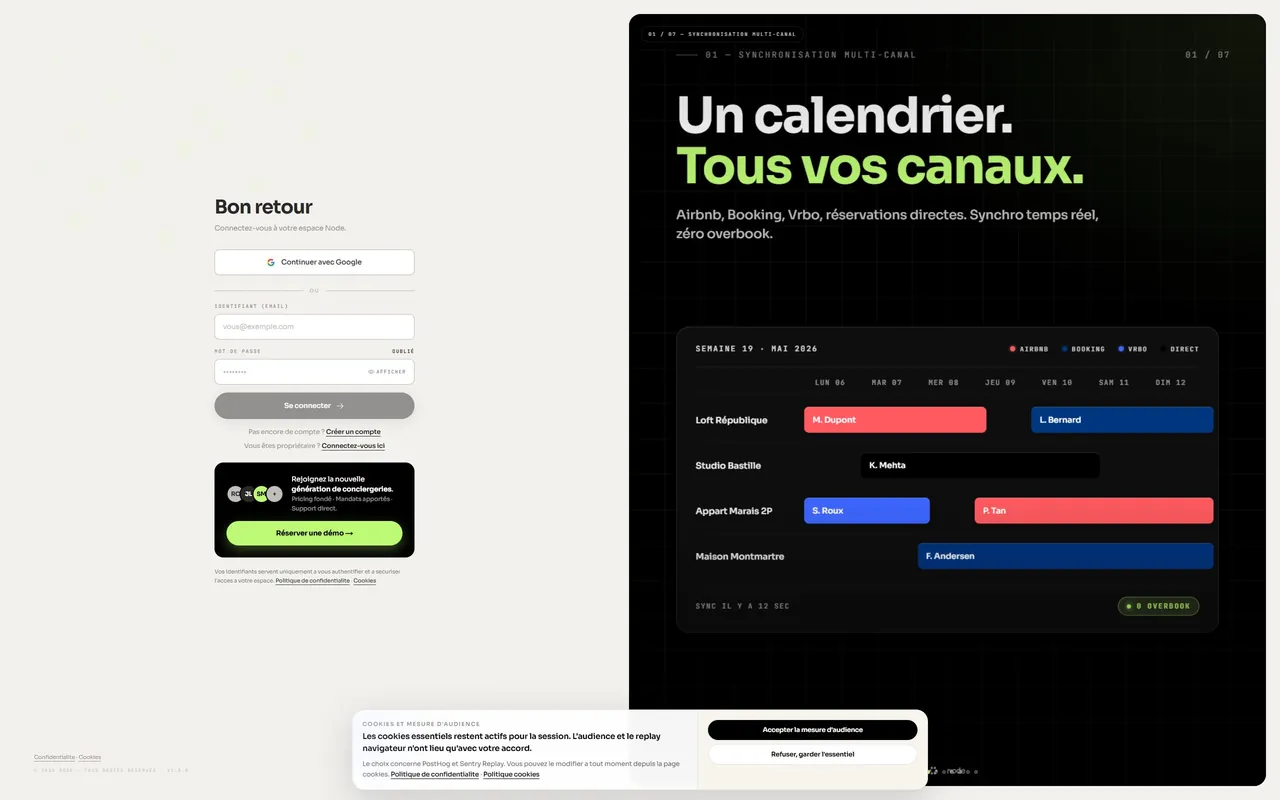
« Kaishift built the interface of Node, our channel manager: dense but readable, made to be used every day. A responsive team that quickly understands the business. »
« Kaishift built the interface of Node, our channel manager: dense but readable, made to be used every day. A responsive team that quickly understands the business. »
« Kaishift built the interface of Node, our channel manager: dense but readable, made to be used every day. A responsive team that quickly understands the business. »
Translated from French. Each quote was approved in writing by the client.
Questions
Common questions
How much does an AI agent cost?
It depends on what the agent decides, how many systems it reads and writes, and how often it runs. An agent that sorts one inbox and drafts replies for approval is a small build; one that works across a CRM, a calendar and a booking platform is larger. You also pay the model provider for usage, on your own keys. We price each agent after a free call, in a written proposal within 72 hours.
Why doesn't Kaishift publish its prices?
Because the same request can mean very different work. A fixed price list would either squeeze large projects, where testing and security review get cut to fit, or overcharge small ones. We prefer one price for one written scope, sent within 72 hours of a free 30-minute call, together with a free demo on one of your real tasks.
Who pays for hosting and AI model usage?
You do, directly to the providers. Everything we build runs on accounts in your company's name: your cloud, your repositories, your API keys. Hosting, model usage and software licences are billed to you at the providers' own rates, with no margin added by us. You can see every request, set spending limits, and keep everything if the work with us ends.
What is in the free 72-hour proposal?
The scope, including what is explicitly excluded, a price, a timeline with milestones, and a list of what runs where, meaning which account each component lives on. You also get a free demo running on one of your real tasks. The proposal and the demo are yours to keep, with no commitment, even if you choose another agency.
Is a fixed price or a monthly fee better?
A fixed price suits a defined build with a clear end: a site, an automation, one agent, a back office. A monthly fee for an embedded engineer suits a team with a steady list of things to automate. If you are unsure, start with a fixed project. Moving to an embedded engineer later is easy; paying monthly for a list that runs out is not.
Another question? Write to us, we answer the same day.
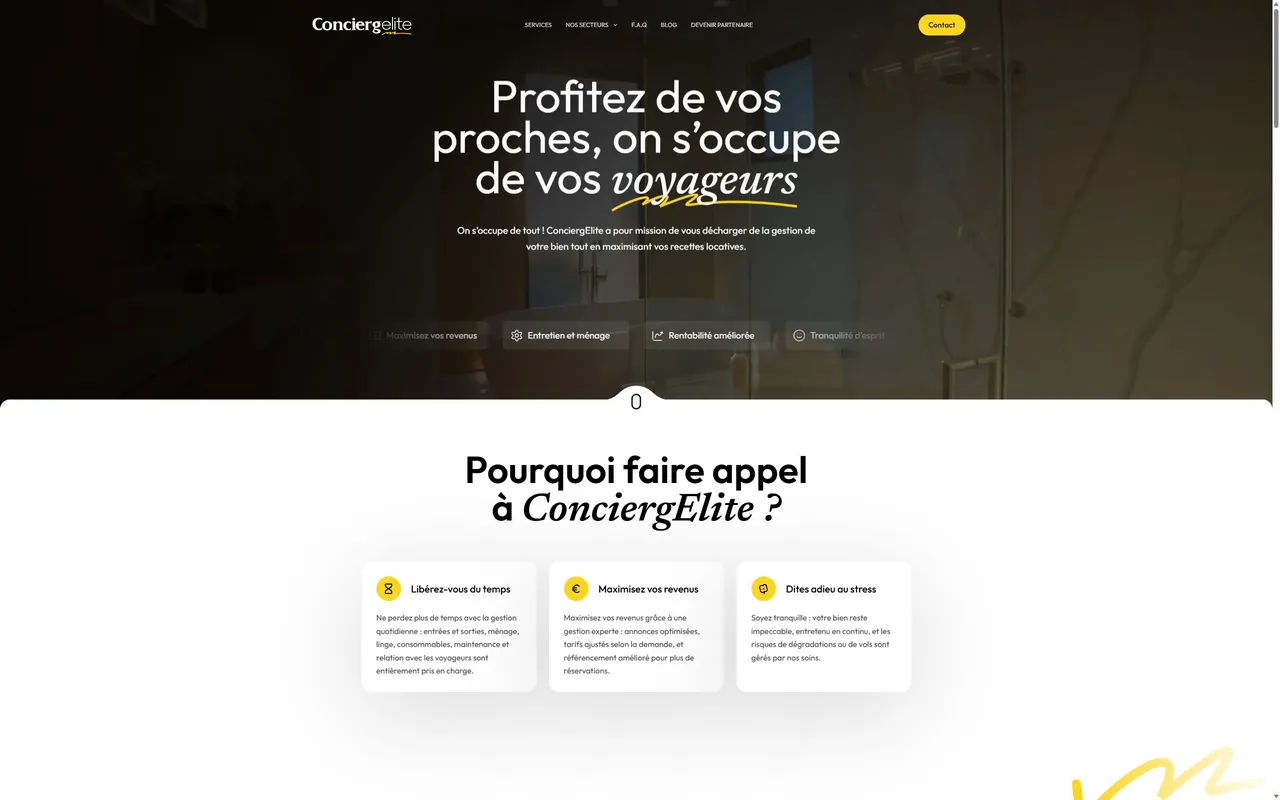
Because a price list would be wrong for most of the people reading it. “An automation project” can mean a small site where a visitor books a car wash in one WhatsApp message, as we built for Lavage Askjour. It can also mean the web presence, internal systems and back office of a franchise network growing across Morocco and France, as with ConciergElite.
A fixed list fails in one of two directions. Set the price for the small job and the large one gets squeezed: testing, security review or documentation quietly disappear to fit the number, and you find out after launch. Set it for the large job and the small client pays for work they never needed. Published packages usually dodge this by narrowing what each one covers and billing the rest as extras.
What we do instead: a free 30-minute call, then within 72 hours a written proposal with one price for one defined scope, and a free demo running on one of your real tasks.
What drives the cost of an AI automation project?
Six inputs, roughly in order of how much they move the number.
Cost driver
Cheaper when
More expensive when
Scope
One process, one team, a clear start and end
Several processes, several teams, rules that differ by branch or country
Systems to connect
Tools with documented APIs: a CRM, a form, a calendar
Old software, exports sent by email, a portal with no API
Data quality
One clean source of truth
The same client stored three different ways across spreadsheets, CRM and inboxes
AI model usage
Short, predictable requests that a small model handles
Long documents, many steps per task, high volume
Security and compliance
Internal data, a handful of users
Personal or health data, clients under GDPR, audit trails, access per role
Who runs it afterwards
Your team takes over with documentation
Someone has to monitor, fix and extend it every month
Connections are usually the hidden cost. Wiring an agent into the five tools your team already uses, with the right permissions, and keeping those links alive when a vendor changes an export format, often takes longer than building the agent. Count your systems before asking for a quote.
Data quality decides whether the AI works at all. An agent reading a CRM full of duplicates gives confident wrong answers. A quote that skips cleaning is only cheaper on paper.
Model usage is paid by you, on your own keys. The provider bills you directly, so we design our AI agents for that bill: a small model for sorting, a larger one only where judgment is needed, and a spending limit on the key.
Compliance is scope, not a checkbox. A patient journey for a medical tourism company handles health data; a booking page for horse rides does not, and the first needs stricter access rules and logging. Ihab Ait El Caid, our CISO, reviews what we ship before it goes live, more deeply as the data gets more sensitive. See our security approach.
So how much does an AI automation agency cost on the market?
Public data covers software projects in general, much less AI automation. Clutch's software development pricing guide (2026), built from verified client reviews, says custom software projects reviewed on the platform typically cost $10,000 to $49,999, while the average is $132,480. Most firms listed there charge between $25 and $49 an hour, and the usual project runs about 13 months.
Two lessons for anyone estimating custom software development cost. First, the typical project and the average project are far apart: a few very large engagements drag the average up, so the average says little about your project. Second, an hourly rate says nothing about how many hours a team will need.
For AI agents specifically, we found no independent survey of project prices, only vendor blog posts with ranges that contradict each other, so we give no figure. What is documented is the failure rate. Gartner expects more than 40% of agentic AI projects to be cancelled by the end of 2027, citing escalating costs and unclear business value (Reuters, 2025). That is the real cost risk: an agent nobody uses is the most expensive line in any budget.
Which engagement model fits your project?
The model changes how you pay more than how much.
Model
How it is priced
Fits
Watch for
Fixed-scope project
One price for a written scope
A defined build: a site, one automation, one agent, a back office
A change mid-build is a new decision, so the scope must be right first
Phased multi-track project
A price per phase, each scoped when the previous one ends
Several connected builds, such as a web presence, internal systems and a back office
Someone on your side has to set priorities between tracks
Embedded engineer
A monthly fee
A steady list of things to automate and build inside your team's tools
It costs every month, so the list has to be real
The cost of outsourcing software development is not only the invoice. It is also the time your team spends explaining, answering questions and testing. A fixed project concentrates that time at the start; an embedded AI engineer spreads it over months.
Our decision rule: if you are unsure, start with a fixed project, and move to an embedded engineer once the list of work is real. Paying monthly for a list that runs out after six weeks is the mistake we talk people out of.
What does the free proposal in 72 hours contain?
It contains everything you need to say yes or no without another meeting.
Scope. What will be built, in your own terms, and a list of what is explicitly out.
Price. One number for that scope, a price per phase for multi-track work, or a monthly fee for an embedded engineer.
Timeline. Milestones, each with something you can see working.
What runs where. Every component and the account it lives on: your cloud, your repositories, your API keys. Self-hosted parts are named and stay open source.
The demo. A working version on one of your real tasks, so you judge the work and not a slide deck.
The proposal and the demo are yours to keep, with no commitment. If a smaller project, or no project, would serve you better, the proposal says so.
What will you pay after launch, and to whom?
You pay the running costs directly to the providers, because everything runs on your accounts. They fall into three groups:
Hosting. The cloud or platform where the software and automations run, billed to your company.
Model API usage. The AI provider bills per use on your own keys, and every request shows on your own dashboard.
Software licences. Your CRM, automation platform seats or other tools, in your name.
This matters for price. An agency that resells hosting or AI usage with a margin earns more when your agent uses more, which is the wrong incentive. When the bill is yours, you can check it, cap it and set it against the hours the automation saves. And if the work with us ever ends, nothing has to be migrated, because nothing was held by us. More in own your automation stack.
How do you compare quotes from different agencies?
Ask every agency the same questions and put the answers side by side. A quote that cannot answer them is not cheaper, only vaguer.
Question to ask
A sound answer
A warning sign
What exactly is in scope?
Named processes, screens and integrations, plus a list of exclusions
“AI automation of your sales process”
Whose accounts does it run on?
Yours: cloud, repositories, API keys
The agency's platform, with a fee to keep access
Who pays for model usage?
You, at the provider's rates, on your keys
Bundled “AI credits” with no unit price
What happens after launch?
Written support terms, or a handover with documentation
Nothing written, or open-ended hourly support
Who reviews security?
A named person and what they check
A generic line about industry standards
Can you see it working before you sign?
A demo on your own task or data
Slides and a case study from another sector
What are the red flags in an AI automation quote?
A price before anyone asked about your systems. If the number came before the questions, it was not built for you.
“Unlimited” anything. Unlimited revisions or automations usually means undefined scope, settled later in an argument.
Agent washing. The same Reuters report notes Gartner's warning about vendors rebranding chatbots and assistants as agents without real agentic capability. Ask what the agent decides on its own, and what it does when it is unsure.
No line for data work when your data plainly needs it.
Who should not work with us on these terms?
If your purchasing rules require a public price list before any conversation, we are not a fit. The same goes if the job is one connection between two tools that your team could set up in an afternoon with an off-the-shelf automation platform: do that, and call us when it outgrows itself. And if you want an agency to hold your accounts and keys, look elsewhere: we only build on accounts you own.
How do you get a number for your project?
Book a free 30-minute call. Within 72 hours you receive the written proposal with a price, and a free demo running on one of your real tasks. Kaishift's team, led by our CTO Amine Lamfichekh with more than 12 forward-deployed engineers, works with clients in Europe, Morocco, the Arab world and North America, in French, Arabic, English and Spanish. See what we have shipped in the portfolio, then book the call.
Why trust us
facts, not awards.
18businesses served
4countries: Morocco, France, Spain, Turkey
FR · AR · ENwe work and build in three languagesFrançaisالعربيةEnglish
0 €to try us first: a demo on your own caseCallDemoYou decide
72 hfor a written proposal with a clear priceCallWritten proposal
100%of accounts in your nameKeysCloudDataCode
18projects live, all in our portfolio
12+forward-deployed engineers (FDE) inside your tools
let's talk about your goals and the best way to reach them
dev · AI · SaaS · CRM · an AI agent for every role · custom software · web design · nearshore · dev · AI · SaaS · CRM · an AI agent for every role · custom software · web design · nearshore · dev · AI · SaaS · CRM · an AI agent for every role · custom software · web design · nearshore · dev · AI · SaaS · CRM · an AI agent for every role · custom software · web design · nearshore · dev · AI · SaaS · CRM · an AI agent for every role · custom software · web design · nearshore · dev · AI · SaaS · CRM · an AI agent for every role · custom software · web design · nearshore ·