


An embedded AI engineer who works inside your team, week after week

One of our engineers joins your team, learns how your business works, then builds the automations and AI tools you need. The same person every week, for a monthly fee.

Book a free callFree proposal and demo within 72 h

An embedded AI engineer is one of Kaishift's forward-deployed engineers who joins your team for a monthly fee and works inside your own tools: your chat, your CRM, your repositories, your drive. They learn how the work is actually done, then build and run what your team needs: automations, AI agents, internal software and integrations. It is the same person week after week, so what they learn about your business stays with your business.

An embedded AI engineer is an engineer who works as part of your team rather than on a project passed over a wall. They sit in your channels, learn your processes as they really run, build AI and automation into them, and keep running what they built. The work does not stop at a delivery date, because your process does not stop either.

Your own AI engineer

what it does for you

  • Inside your tools

    They work in your chat, your CRM and your files, so nothing changes for your team.

  • The same person every week

    What they learn about your business stays with your business.

  • Yours to keep

    Everything is built on accounts in your company's name and checked for security before it goes live.

  • Your case is different?

    Tell us in 30 minutes. Within 72 hours you get a written proposal and a free demo on your case.

    Book a free call

Our work

a few things we built

All our work

Testimonials

what our clients say, for real

  • JulienNode
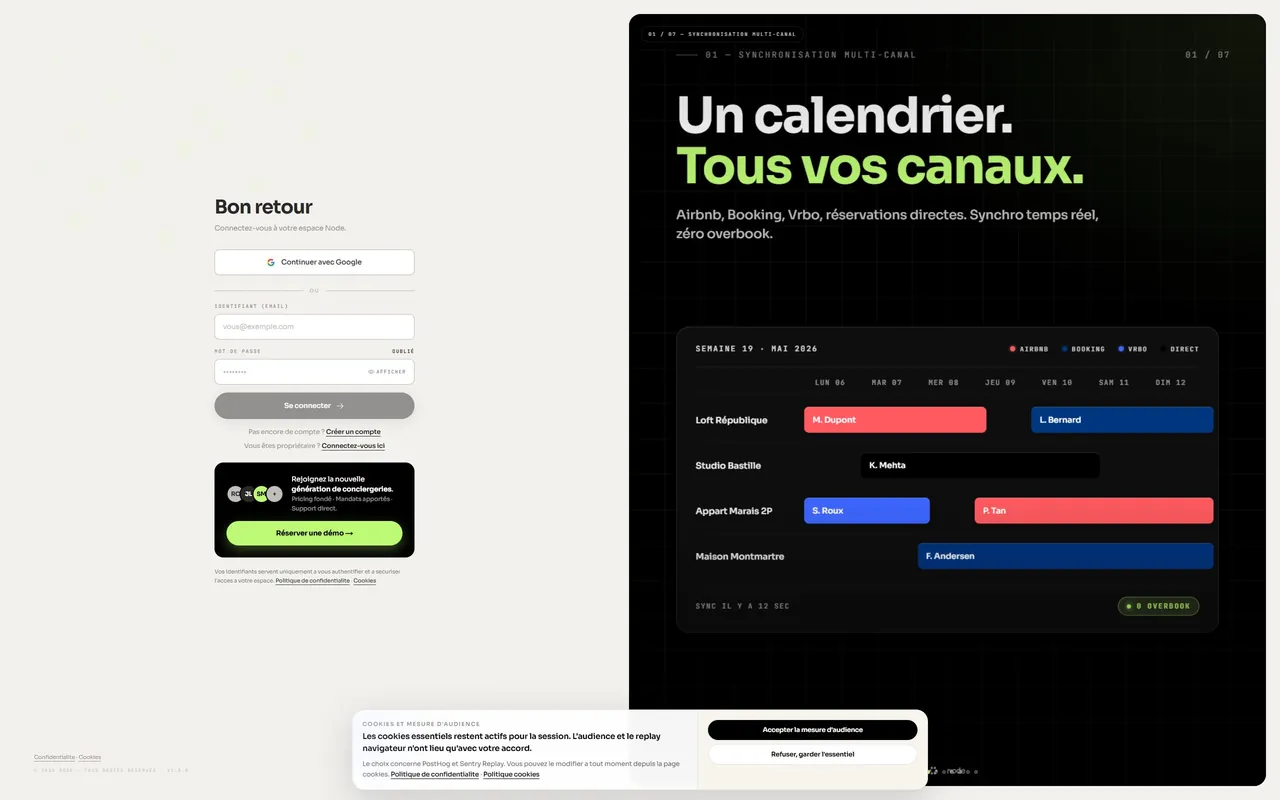
    « Kaishift built the interface of Node, our channel manager: dense but readable, made to be used every day. A responsive team that quickly understands the business. »
    NodeSee the project
  • Reda Bennani KhirConciergElite
    « With Kaishift, we have a site, internal tools and a back office that keep up with the network's growth, in Morocco and in France. »
    ConciergEliteSee the project
  • Ghali Ben BouzidCogniReply
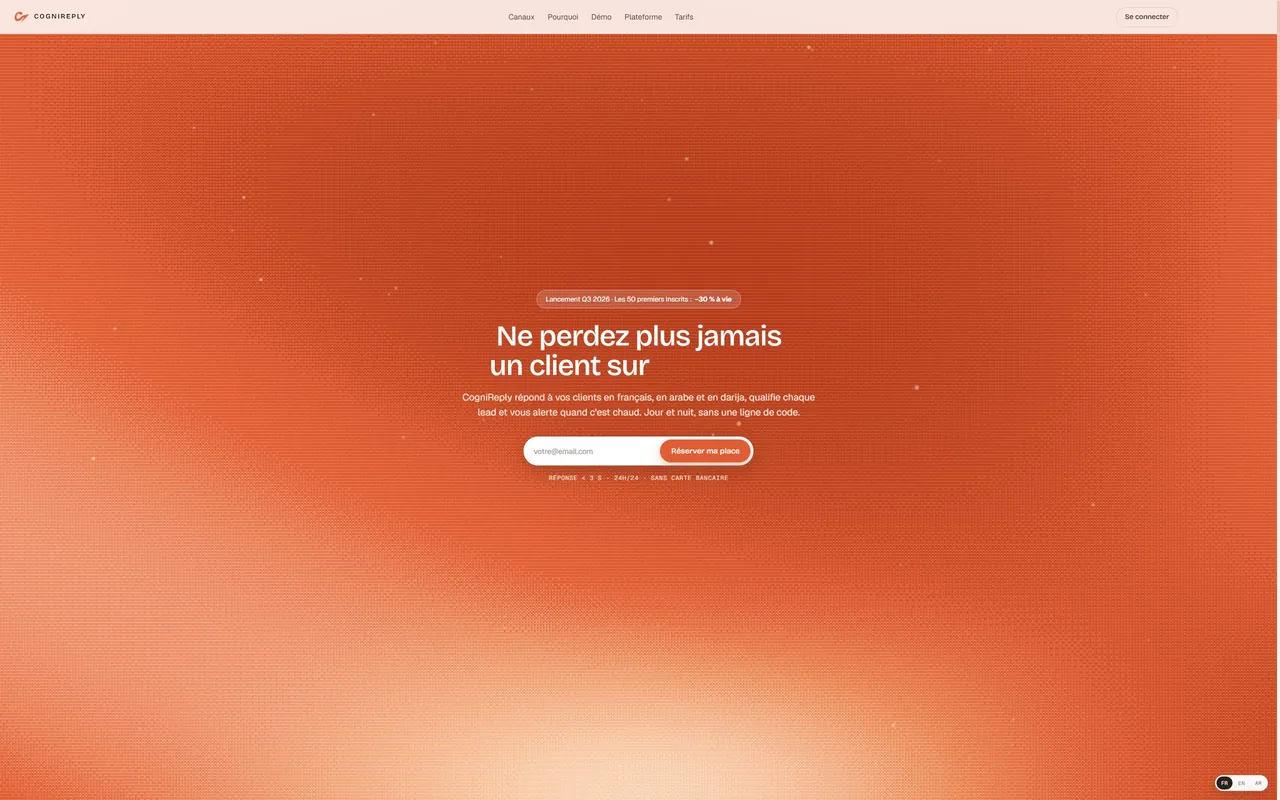
    « Kaishift built CogniReply with us: an AI agent that answers customers in Darija, French and Arabic, presented simply, without jargon. »
    CogniReplySee the project

Translated from French. Each quote was approved in writing by the client.

Questions

Common questions

What is an embedded AI engineer?

An embedded AI engineer is one of Kaishift's forward-deployed engineers working as part of your team for a monthly fee. They work inside your own chat, CRM, repositories and drive, learn how the work is actually done, then build and run automations, AI agents, internal software and integrations. It is the same person week after week.

What does the engineer do first?

They learn before they build. The engineer joins your tools through an account you control, follows how requests and records move, and asks the people doing the work. The result is a written map of where time goes, ranked by cost. You choose what comes first, and the first build is a small flow your team uses straight away.

How is this different from a one-off project?

A project ends with a handover, and what was learned leaves with the people who built it. An embedded engineer stays. When your process changes, the person who adjusts the automation is the one who built it and already knows why it works the way it does. You never explain your business again to someone new.

Who owns what the engineer builds?

You do. Everything is built on accounts, repositories and API keys in your company's name, so you can log in and read every line without asking us. Before anything ships, our CISO, Ihab Ait El Caid, runs a security review on it. Nothing important sits on an account only we can reach.

How much does an embedded AI engineer cost?

It is a monthly fee, and there is no price list, because the scope depends on what your team needs. Start with a free call. Within 72 hours you receive a written proposal with a clear price, and a free demo running on one of your real tasks. No commitment.

Another question? Write to us, we answer the same day.

Send us your question
Read the full details

What does the engineer do in the first weeks?

Watch, ask, write things down. Before anything gets built, the engineer needs to know how the work really moves, which is rarely how the procedure document says it moves.

Getting access the right way. The engineer joins your chat, your CRM, your repositories and your drive through an account you create and can revoke. No shared passwords, no login borrowed from a colleague.

Following the work. They read the channels where requests arrive and trace how a lead becomes a client, how an invoice gets chased, where a file goes once it is signed. Then they ask the people doing it. The questions are specific: who touches this, which system holds the true record, what happens when it goes wrong.

Writing it down. The result is a short written map of where time goes and where work stalls, ranked by what it costs you. You read it and decide what comes first. Nothing gets built on a guess about your priorities.

Shipping something small. The first build is modest on purpose: one flow that removes a daily chore, so your team sees what working with the engineer looks like before larger work starts.

What does an embedded AI engineer build?

Whatever the map says matters most, across four kinds of work.

Automations. The re-typing between tools disappears: a lead from a form lands in the CRM, a signed document updates the right record, a weekly report assembles itself. It is the same craft as our workflow automation service, done from inside your team.

AI agents. For the steps that need judgment on messy input: sorting an inbox written in French, Arabic and English, reading a supplier email that is half complaint and half order, drafting a follow-up and leaving it for approval. Each agent is built the way our AI agent development work is built, with scoped permissions and a log you can read.

Internal software. The small tools a team wishes it had: an admin screen over a spreadsheet that outgrew itself, a dashboard that answers the question your manager asks every Monday, a form that writes to the right place. When a job grows into a full product, it becomes development work, scoped on its own.

Integrations. Connecting two systems that should have been talking for years, and keeping that connection alive when one of them changes its export format.

Then they run it. Things break when a login expires or a supplier changes a file layout. The engineer who built it is the one who notices, because they are still there.

How is this different from hiring, or from a one-off project?

Compared with hiring. A hire is a long decision about one person and one role, and the role you write today may not be the one you need in six months. An embedded engineer comes from a team. Amine Lamfichekh, our CTO, leads the forward-deployed engineers, and the engineer working with you can draw on a team of more than twelve when a problem needs a second pair of eyes.

Compared with a one-off project. A project starts with a specification and ends with a handover. What was learned during the build leaves with the people who built it, and the next request starts from zero. An embedded engineer keeps that knowledge. When your process changes later in the year, the person who adjusts the automation is the one who built it, and they already know why it was built that way.

Compared with a different contractor each time. It is the same person week after week. You do not explain your business again to a new face every time something needs doing.

Who this suits, and who it does not

Good fitPoor fit
You have a steady list of things to automate or build, not a single taskYou have one clearly defined job; a scoped project will cost you less
Your team works in shared tools: a chat, a CRM, a drive, repositoriesNobody on your side has time to answer an engineer's questions
Your processes change often and the tools have to keep upYou want something built once and then left untouched
You want AI inside daily work, not a pilot that stays a pilotYou would rather an outside party held your accounts and keys
Your team works in French, Arabic or EnglishYou are looking for someone to replace your whole technical team

If one clear task is all you have, we will say so on the call and point you to the right service.

Who owns what gets built, and how is it secured?

You own all of it. Everything the engineer builds lives on accounts, repositories and API keys in your company's name. You can log in today and read every line without asking us. If the work ever ends, nothing has to be migrated, because nothing was ever held by us.

The engineer works with the access you grant and nothing more. Each agent gets credentials of its own, limited to the actions it needs, so you can revoke one without breaking anything else.

Before anything ships, Ihab Ait El Caid, our CISO, runs a security review on it: what it can reach, what it can change, what happens when text from a stranger tries to give it instructions. The wider approach is set out on our security page.

How to start

A free call first. You describe how your team works and where the hours go, and we tell you plainly whether an embedded engineer is the right shape or whether a single project would serve you better.

Within 72 hours you receive a written proposal with a clear price: what the engineer will focus on first, and what it costs each month. You also get a free demo running on one of your real tasks. Both are yours to keep, with no commitment.

Kaishift is a dev and AI agency run from Casablanca, working with clients in Morocco, France, Spain and Turkey, in French, Arabic and English. To see what our engineers have shipped, open the portfolio. When you are ready, book the call.

Contact

let's talk about your project

Prefer a call? Book 30 minutes

Write to usWe answer the same working day.