Nearshore software development from Morocco, with the code on your accounts

Engineers on GMT, at most two hours from Western European time, working your hours, in French, English, Arabic or Spanish, inside your tools and on your accounts.

Book a free callFree proposal and demo within 72 h

Nearshore software development means hiring engineers in a nearby country, close enough to share most of your working day and to visit in a morning, instead of hiring at home or on the other side of the world. For companies in France, Spain, Belgium or the UK, Morocco is one of those countries. Kaishift is a dev and AI agency based in Morocco: our engineers build SaaS products, CRMs, back offices and AI agents for clients in Europe, Morocco, the Arab world and North America, and the code lives on your accounts from the first commit.

Nearshore software development is outsourcing software work to a team in a nearby country with a small time difference, so both sides keep the same hours, share a working language and can meet in person without a long-haul flight. It sits between onshore (same country, highest local cost) and offshore (distant country, large time gap).

Nearshore from Morocco

what it does for you

  • Your working day

    Morocco shares the working day with Europe, so questions get answered the same morning.

  • Your language

    French, English, Arabic and Spanish, including right-to-left interfaces.

  • Your data rules

    GDPR for European data, Moroccan law 09-08 locally, hosting in the region you choose.

  • Your case is different?

    Tell us in 30 minutes. Within 72 hours you get a written proposal and a free demo on your case.

    Book a free call

How we work

how we build it

  1. Free call

    30 minutes: how your days go, what costs you time.

  2. Proposal and free demo

    Within 72 hours: a written proposal with a clear price, and a free demo on one of your real tasks. No commitment.

  3. We build

    On accounts in your name, with a weekly update.

  4. It runs

    It goes live, and we stay reachable.

Our work

a few things we built

All our work

Testimonials

what our clients say, for real

  • Edgar Cayuelas & David GarayIndegate Consulting
    « Kaishift built our bilingual site, credible with a demanding international clientele. A team that listens, delivers and stays reachable. »
    Indegate ConsultingSee the project
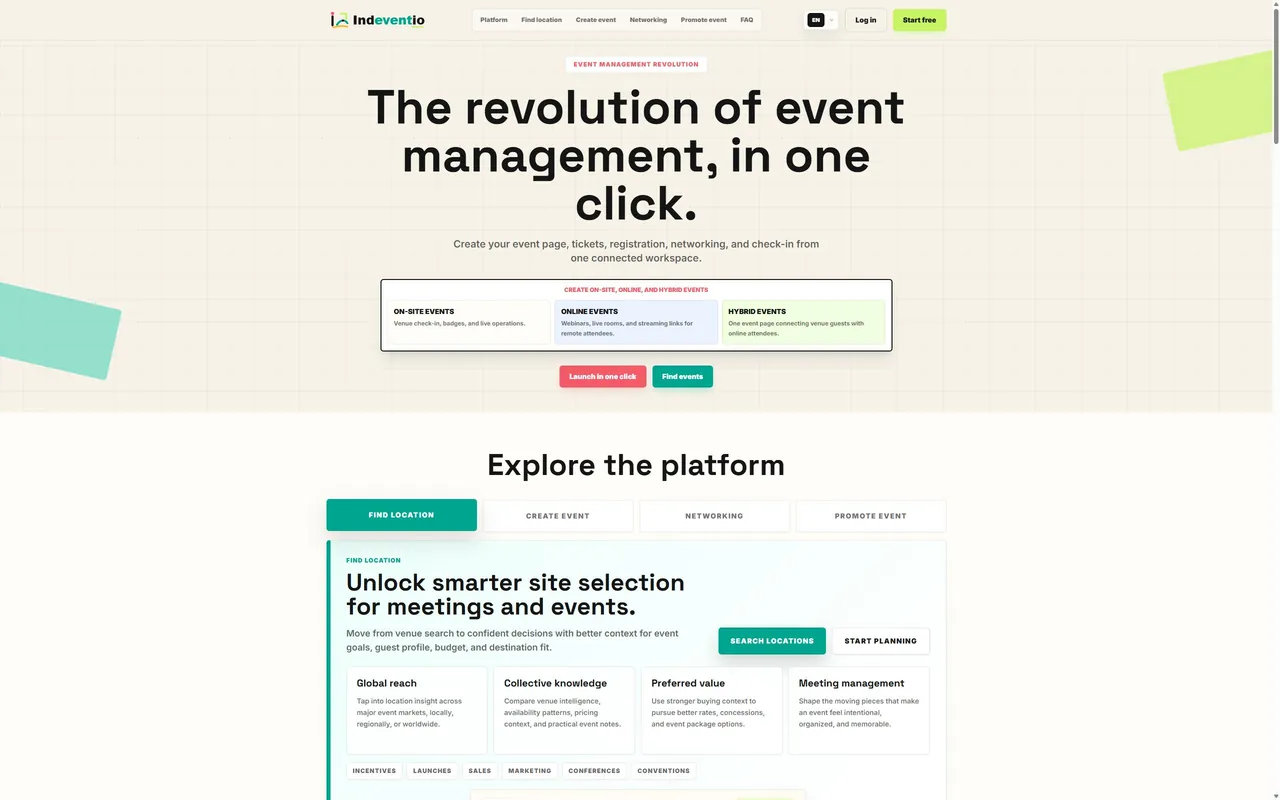
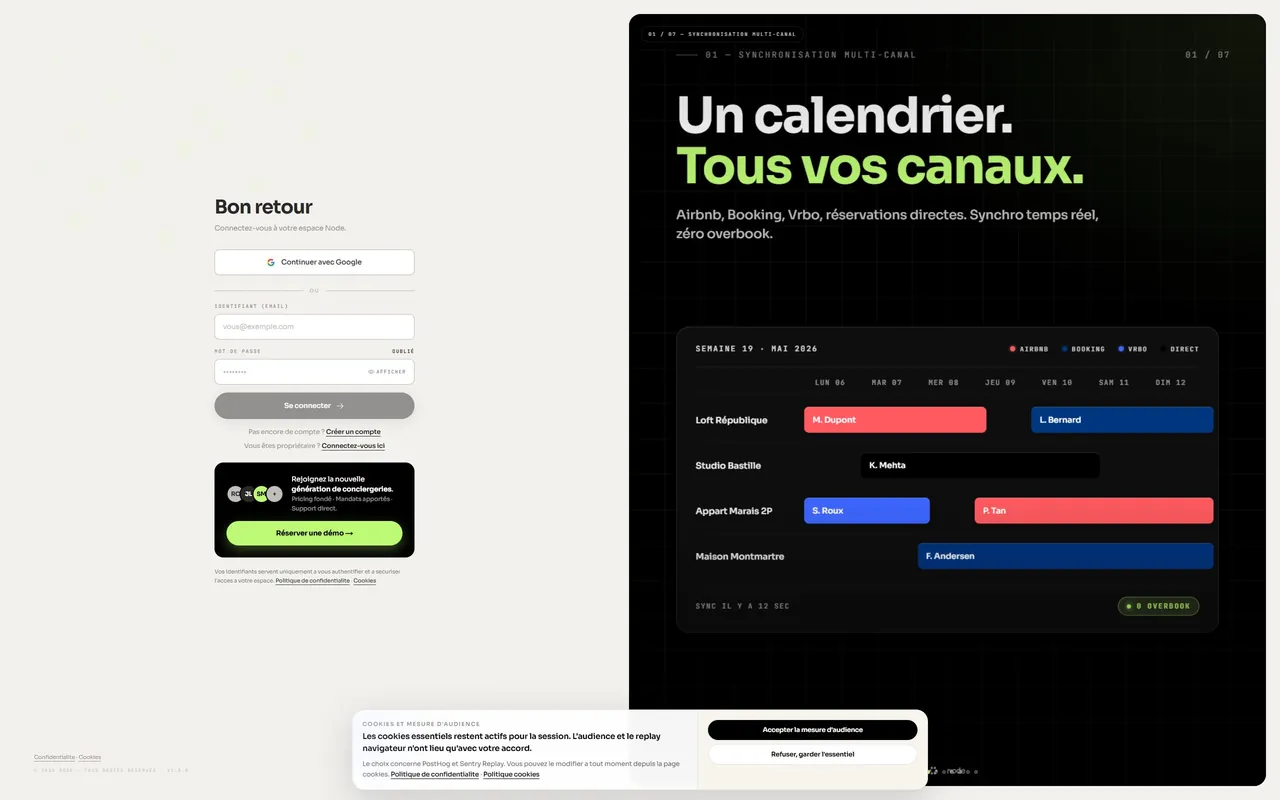
  • JulienNode
    « Kaishift built the interface of Node, our channel manager: dense but readable, made to be used every day. A responsive team that quickly understands the business. »
    NodeSee the project
  • Reda Bennani KhirConciergElite
    « With Kaishift, we have a site, internal tools and a back office that keep up with the network's growth, in Morocco and in France. »
    ConciergEliteSee the project
  • Ghali Ben BouzidCogniReply
    « Kaishift built CogniReply with us: an AI agent that answers customers in Darija, French and Arabic, presented simply, without jargon. »
    CogniReplySee the project
  • Aymane HamimAMUD
    « Kaishift gave AMUD a warm site, in French and Arabic, that tells our story and makes people want to join us. »
    AMUDSee the project

Translated from French. Each quote was approved in writing by the client.

Questions

Common questions

What is nearshore software development?

Nearshore software development is outsourcing software work to a team in a nearby country with a small time difference. Both sides keep the same working hours, share a language and can meet without a long-haul flight. For companies in France, Spain, Belgium or the UK, Morocco is nearshore: the gap is zero to two hours depending on the season.

What is the time difference between Morocco and France?

Since 20 September 2026, Morocco has stayed on GMT all year. That puts it one hour behind Paris in winter and two hours behind from late March to late October, when France is on summer time. A 9:00 to 18:00 day in Morocco overlaps eight hours with Paris in winter and seven in summer.

Is it GDPR compliant to work with developers in Morocco?

It can be, with the right paperwork. Morocco has no EU adequacy decision, and the EDPB treats remote access by a processor in a third country as a transfer, even if data stays on EU servers. The standard answer is a data processing agreement with the Commission's standard contractual clauses, anonymised test data and production access limited to named engineers.

How much does nearshore development in Morocco cost?

There is no price list at Kaishift. Cost depends on scope: how many engineers, what seniority, how much overlap and on-site time you need, and how long the work runs. After a free 30-minute call you receive a written proposal with a clear price within 72 hours, plus a free demo on one of your real tasks.

Who owns the code a nearshore team writes?

With Kaishift, you do, from the first commit. Code lives in your repositories, the app runs on your cloud account and the API keys are in your company's name, so you can read every line and deploy without us. With any vendor, check that the contract assigns the IP to you and that deployment is documented in your repository.

Is nearshore outsourcing a good fit for a startup?

It fits when the founders keep the product decisions and need a team to build a first version fast. It fits badly when the code is the whole company and you can hire, because the knowledge should end up in your own team. A good arrangement plans that handover from the start, with the code already on your accounts.

Another question? Write to us, we answer the same day.

Send us your question
Read the full details

What is nearshore software development, in practice?

It is a matter of distance from you, not a property of a country. Morocco is nearshore for a team in Paris, Brussels or Madrid. For a team in Toronto it is offshore, and the same engineers would need a different way of working: more written handovers, fewer live calls.

What you actually buy is overlap. When your product manager posts a question at 10:00, the answer comes before lunch, not the next morning. A bug found in a demo gets fixed that afternoon. Everything else on a nearshore sales page (cultural fit, proximity, agility) follows from those shared hours, or it does not hold.

Nearshore vs offshore software development: what actually changes?

Mostly time and access, less the price. Here is how the three models compare for a company in Western Europe.

OnshoreNearshore (Morocco, for Western Europe)Offshore (distant time zones)
Time zone overlapFull dayMost of the day: 0 to 2 hours apart, depending on seasonA few hours at most, sometimes none
LanguageYour ownDepends on the team; ours works in French, Arabic, English and SpanishUsually English, a second language on both sides
What drives costLocal salaries and a tight hiring marketSeniority, team size, how much overlap and on-site time you needLower rates are the pitch; coordination hours, rework and night calls are the hidden cost
IP and data protectionDomestic contract, data stays in the EUYour contract decides IP; GDPR transfer rules apply if the team can see personal dataSame transfer rules; distance makes audits and visits rarer
Typical failureCost and slow hiringA vendor treating "close by" as a substitute for processSpecs built exactly as written, even when they were wrong

Why Morocco for European teams?

The case for nearshore software development in Morocco comes down to a working day that lines up with Western Europe, the languages your business already uses, and a short flight. Some pages online are out of date on the first point.

Time zone. Since 20 September 2026, Morocco has been on GMT all year, with no daylight saving time (Time.is, 2026). From 2018 until then it ran on GMT+1 outside Ramadan, and many nearshore pages still say so. In practice, in winter Morocco shares the time of London and Lisbon and is one hour behind Paris, Madrid and Brussels. From late March to late October, when Europe moves its clocks forward, Morocco is one hour behind London and two hours behind Paris. An engineer working 9:00 to 18:00 in Morocco overlaps eight hours with a 9-to-6 day in Paris in winter, seven in summer. If you need your morning stand-up covered all year, put it in the contract rather than assume it.

Languages. Kaishift works in French, Arabic, English and Spanish. A spec, a ticket or an error message written by someone who reads your market's language catches mistakes a translator would not. The AMUD site runs in French and Arabic, the Balade Agadir site in French, Arabic and English, and the trade-data platform Indatex serves exporters in English, French, Spanish and Arabic.

Travel. A direct flight from Paris to Marrakech takes about 3 h 20 to 3 h 30 (Rome2rio, 2026), and Madrid to Tangier about 1 h 30 (Rome2rio, 2026).


How does GDPR apply when your developers are in Morocco?

If the team can see personal data from your systems, GDPR treats it as a transfer to a third country, even when every record stays on your servers in Frankfurt or Paris. The European Data Protection Board is explicit: remote access by a processor in a third country, even just displaying data on a screen for support, is a transfer (EDPB Guidelines 05/2021, 2023). Morocco is not on the European Commission's list of adequacy decisions (European Commission, 2026), so the transfer needs a safeguard. The usual one is the Commission's standard contractual clauses, in the version adopted on 4 June 2021 (European Commission, 2021).

Many vendors skip this because "the data stays in the EU" sounds like enough. It is not. Here is what we do:

  1. Sign a data processing agreement with the standard contractual clauses before anyone gets access.
  2. Build on development and staging environments filled with fake or anonymised data, so most of the work never touches a real customer.
  3. Give production access only to named engineers who need it, through accounts you create and can revoke.
  4. Keep access logs on your side, where you can read them without asking us.

On the Moroccan side, law 09-08, promulgated on 18 February 2009, governs personal data processed in Morocco. The CNDP keeps a list of countries it considers adequate; its 2015 deliberation names France, Spain, Germany, Belgium, the Netherlands, Portugal, the UK and Switzerland among others, and still requires that each transfer be notified to the CNDP (CNDP, 2015). That matters when data starts in Morocco, for example the customers of a Moroccan subsidiary. None of this replaces your own counsel; it tells you which questions to bring.

What should you check before outsourcing software development?

Ask any vendor these ten questions. If they hesitate on the first two, stop there.

  1. Whose accounts hold the code and the cloud? Yours, from the first commit: your Git organisation, your cloud account, your API keys. Not a handover "at the end".
  2. Who exactly will work on it? Names of the engineers, and a written rule for what happens when one leaves.
  3. Is any of the work subcontracted? Ask in writing. A nearshore team quietly reselling an offshore one gives you the drawbacks of both.
  4. What are the shared hours? Written down, including what changes when Europe switches to summer time.
  5. How is personal data handled? The answer should mention standard contractual clauses, anonymised test data and access you control.
  6. Does the contract assign the IP to you? Code, designs and documentation, on payment.
  7. What does a normal week look like? Demo cadence, ticket tool, who writes release notes.
  8. Who reviews security before release? A named person, not "the team".
  9. Can you run it without them? Deployment should be documented in your repository. If only the vendor can deploy, you are locked in.
  10. Will they show working software before you sign? A small demo on one of your real tasks tells you more than any portfolio.

How is Kaishift's model different from a classic nearshore team?

Most nearshore vendors sell a team that works on its own tools and ships deliveries to you. Our forward-deployed engineers work the other way round: they join your chat, your ticket tracker and your repositories through accounts you create, and they build inside your environment. Amine Lamfichekh, our CTO, leads an engineering team of more than twelve. Ihab Ait El Caid, our CISO, reviews what each piece can reach before anything ships; the approach is on our security page.

Three rules follow from that:

  • Code and infrastructure on your accounts. Your repositories, your cloud, your API keys; self-hosted parts keep public source code and no licence fee. If we stopped working together tomorrow, nothing would need migrating.
  • The same engineers week after week. What they learn about your product stays with the people building it.
  • Working software before a contract. After a free call, you get a written proposal within 72 hours and a free demo running on one of your real tasks.

For Hostguide, we built the product and its site: a platform for short-term rental managers with calendar sync to Airbnb and Booking.com, cleaning planning, incident tracking and reports. For ConciergElite, an Airbnb concierge franchise active in Morocco and France, we built the web presence, internal systems and back office. If you are building a product of your own, our SaaS development page explains how we scope it.

What goes wrong with nearshore teams, and how do you avoid it?

The failures are rarely about distance. They are about control.

RiskWhat it looks likeHow to avoid it
Lock-inThe app runs on the vendor's hosting and only they can deployYour accounts from day one, deployment documented in your repo
Hidden subcontractingQuality drops and the faces on calls keep changingNamed engineers in the contract, subcontracting answered in writing
Knowledge walks outA key engineer leaves and nobody knows why the code works that wayDecisions written in the repository, the same people over time
Data on the wrong laptopsProduction dumps copied "for testing"Anonymised seed data, production access for named people only
Close but silentSame hours, yet questions wait two daysAgreed response times and a weekly live demo

Who should keep development in-house?

Keep it in-house when the software is the company and you can hire: the people who understand the code are your main asset, and a vendor should at most speed up a first version while you build your team. Outsourcing software development for startups works when the founders keep the product decisions and the vendor builds; it fails when the vendor ends up deciding what the product is.

Keep it in-house, or at least onshore, in three more cases:

  • A client or a regulator requires that only staff inside the EU can access the data.
  • The work needs someone on site most days, on a production line or in a warehouse.
  • Nobody on your side has time to answer an engineer's questions each week. No outside team fixes that.

If one of these describes you, we will say so on the call.

How do you start?

Book a free 30-minute call and describe what you want built and who will use it. Within 72 hours you receive a written proposal and a free demo running on one of your real tasks, with no commitment. Pricing is custom, sized by scope after the call. To see what we have shipped for 18 businesses in Morocco, France, Spain and Turkey, open the portfolio, then book the call.

Why trust us

facts, not awards.

  • 18businesses served
  • 4countries: Morocco, France, Spain, Turkey
  • FR · AR · ENwe work and build in three languages
  • 0 €to try us first: a demo on your own case
  • 72 hfor a written proposal with a clear price
  • 100%of accounts in your name
  • 18projects live, all in our portfolio
  • 12+forward-deployed engineers (FDE) inside your tools

let's talk about your goals and the best way to reach them

One team answers you the same day.

Amine LamfichekhCTOBook a call

Contact

let's talk about your project

  • Where we areMorocco, working worldwide
  • Writehello@kaishift.com
  • LanguagesFrench, Arabic, English
Prefer a call? Book 30 minutes

Write to usWe answer the same working day.