 Kaishift
· 3 min read
AI agents vs. workflow automation: which does your business actually need?
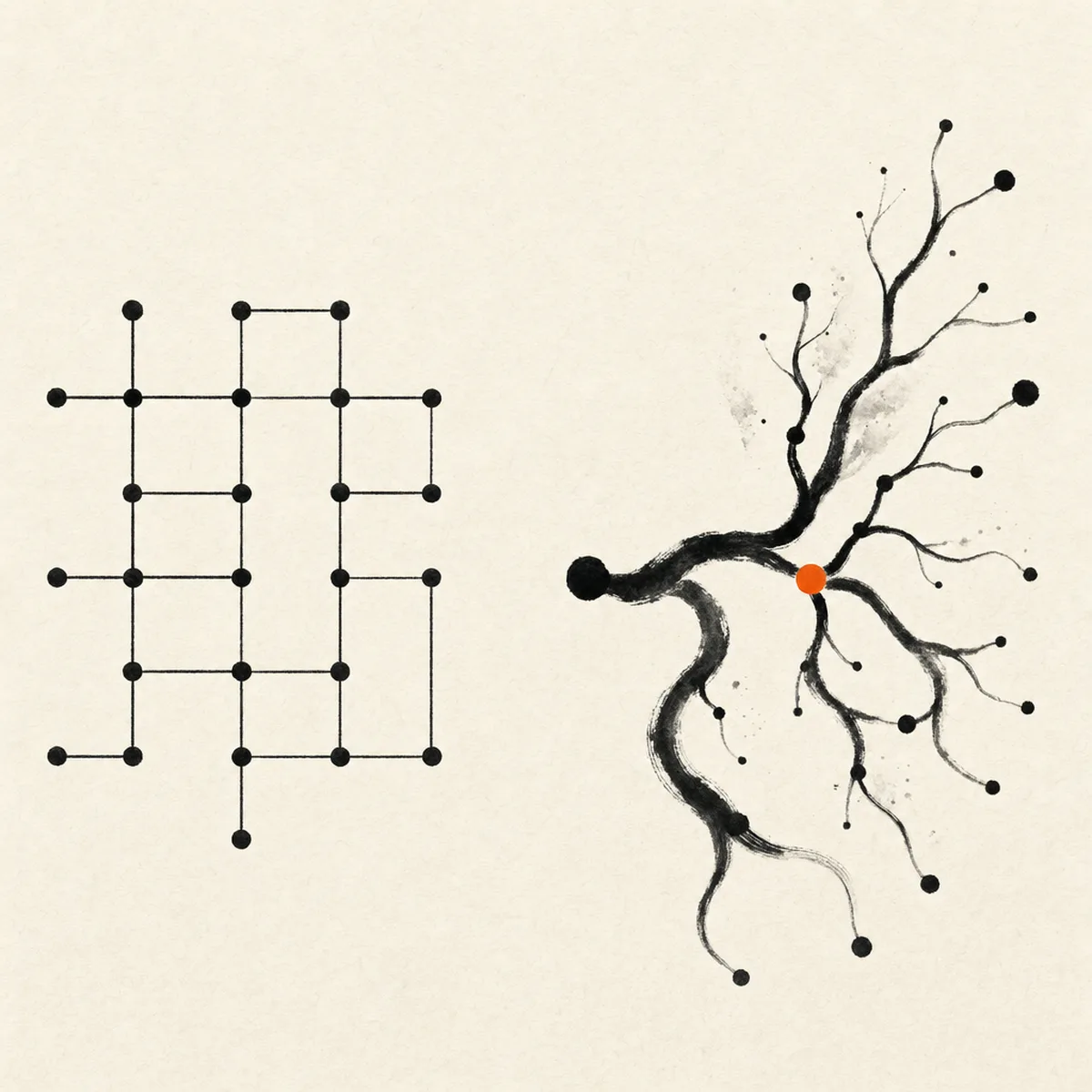
Everyone selling "AI" right now blurs two very different things into one word. It costs businesses real money, because you end up buying an agent for a job a fifty-line automation would have done, or wiring a rigid automation onto a job that needed judgment. So let us separate them cleanly.
Workflow automation: does exactly what you told it
A workflow is a fixed set of steps. A form comes in, it drops a row in a sheet, pings a Slack channel, sends a templated email. It runs the same way every time, with no judgment and no decisions outside the rules you wrote. Tools like n8n, Zapier and Power Automate are excellent at this, and honestly most "we need AI" problems are really this.
This is the right tool when the work is repetitive and rule-based: invoice processing, lead routing, syncing two systems that refuse to talk, sending the same reminder on a schedule. Forrester's study of one of these platforms found a 248% return over three years, with payback in under six months. That number does not come from anything clever. It comes from a boring rule running a few thousand times without a human babysitting it.
If you can write the job down as "when X, do Y, then Z," you want a workflow. Do not pay for an agent.
AI agents: make the call when the rules run out
An agent is a different category of software, not a smarter automation. You give it a goal and a set of tools, and it decides how to reach the goal, including in situations you never scripted. It reads messy, unstructured input, weighs the context, and picks an action. When the input is a rambling customer email instead of a clean form, and the right next step depends on what the message actually says, a fixed workflow hits a wall. That wall is where an agent earns its cost.
The catch is that the same autonomy is the risk. An agent that can decide is an agent that can decide wrong. This is why the boring parts matter more than the model: scoped permissions, sandboxed actions, and a log of every decision you can actually read. An agent you cannot audit is not an asset. It is a liability with a nice demo.
The honest answer: you usually want both
The systems that actually work are not one or the other. A workflow catches the message and does the deterministic 80% (log it, tag it, route it), then hands the 20% that needs a judgment call to an agent, which does its part and hands control back. Deterministic where you can be, intelligent only where you have to be. That is cheaper to run, easier to trust, and far easier to fix at 3am than one "do everything" agent.
So before anyone quotes you: write the job down as steps. If you can, it is a workflow. If a step reads "figure out what they meant and decide," that step is an agent, and only that step. Buy exactly what the problem is, not what the trend is.
That is how we scope it on a call: which floors are rules, which floors need judgment, and what it costs to build each. If you want the wider picture first, here is what an AI automation agency actually does.
Ready to make the shift?
Book a call and leave with a roadmap — yours whether we work together or not.
Book a call